Tuesday, December 18, 2012

Phi Phi Overnight diving with Calypso Divers


Calypso Divers offers a 2-days / 1-night Overnight Special to the Phi Phi islands, two times a week,departing every Monday and Friday. On this fun and action-packed trip you will get to do 7 dives at all the best local dive sites around Phuket and Phi Phi, and you’ll spend the night at a lovely, ocean-front hotel on the main island of Phi Phi Don. Hotel transfers and all meals on the boat are also included in this special package.

Only 10,900 Baht per diver (Twin share basis) or 7,900 Baht per diver without accommodation (you arrange your own hotel)

Schedule
1st Day
(Monday or Friday)
07:20 pick up guests in Patong Area
07:40 pick up guests in Kata / Karon area
08:15 departure from Ao Chalong harbour
08:30 breakfast
10:30 1st dive at Shark Point
12:00 lunch
13:00 2nd dive at Phi Phi Islands
14:30 fruits + snacks
15:30 3rd dive at Phi Phi Islands
17:00 dinner
18:30 4th dive at Phi Phi Islands (night/sunset dive)
19:30 check-in at bungalow on Phi Phi Island
2nd Day
(Tuesday or Saturday)
07:00 check-out from Phi-Phi bungalow
07:00 breakfast in the restaurant on the beach
08:30 5th dive at Phi Phi Islands
10:30 fruits + snacks
11:00 6th dive at "King Cruiser" wreck
12:00 lunch
13:00 7th dive at Koh Doc Mai
15:30 arrival to Ao Chalong harbour and transfer back to hotel

Seven superb dives in only two days. Be prepared for unforgettable dives around Phi Phi Island!

Contact us at info@calypsophuket.com or call on +66 (0)76 330869 :)

*Photos courtesy of www.neilwilkinsonphotography.co.uk

Friday, December 7, 2012

*Fascinating Fish Fact*


The banded sea krait (Laticauda colubrina) is an amphibious species of snake that spends most of its life at sea in the tropical waters of the Indo-Pacific. To adapt to this semi-aquatic lifestyle, the banded sea krait has evolved unusual morphology. It has retained the ventral scales and cylindrical body shape typical of land snakes, as this helps with climbing on land and in low trees, but its tail is paddle-shaped, which allows ease of movement in water. It also has large lungs so that it can spend long periods underwater, as well as valved nostrils that keep out saltwater while diving, and glands under the tongue that expel excess salt.

* There are around 50 types of Sea Krait and all belong to the Cobra family.

* The average Sea Krait grows to about 2 meters long with the largest growing up to 3 meters.

* They have flattened tails to swim fast and have flaps over their nostrils that close when they are underwater.

* With no gills they need to surface for air, but can stay down as deep as 100 meters for up to an hour.

* A Sea Kraits heart is located mid-body to enable blood pressure to be stable throughout its length which is very important when diving deep.

* Sea Kraits are highly poisonous but majority of the sea snakes are not aggressive unless you severely mistreat it. On average the sea snake can produce 10 – 15 milligrams of venom with one bite strike. If it injects 15 mg of venom, the victim may die immediately due to the speed of the poison spreading in the blood system.

* Sea Kraits go on land to lay their eggs. Only two nests have ever been reported, meaning its reproductive biology is poorly understood.

* The banded sea krait displays marked sexual dimorphism, the female being heavier and around a third longer than the male.


Saturday, November 24, 2012

Phi Phi Dives: Lo Sama Bay


Lo Sama Bay is situated at the southern end of Koh Phi Phi Ley. It is a beautiful bay surrounded by sheer cliffs with a small islet in the centre. It is possible to explore the entire islet at a leisurely pace on a single dive. The highlight of this dive is a channel at the south of the islet which divers can pass through in single file, marvelling at the amazing seafans and soft corals.

The deeper part of the site is home to schools of snapper, and there are plenty of lionfish, moorish idols, butterflyfish, parrotfish, and we have also spotted juvenile clown triggerfish here! There are several overhangs, nooks and crannies around here so the macro marine life is very nice - plenty of nudibranc's, different kinds of shrimps, some huge moray eels, harlequin ghost pipefish and seahorses if you are lucky enough to spot them despite their amazing camouflage. Also look out for banded sea kraits, cuttlefish, octopus and hawksbill turtles.

This is a relatively easy and shallow dive (depths from 4-23 metres) so is a perfect place for a 3rd dive or for training dives. Currents are mild but do be careful of overhead boat traffic - especially if you are surfacing on the eastern side of the islet. This site is generally accessible year round.


Friday, November 16, 2012

*Fascinating Fish Fact*


Moray eels are of the family Muraenidae. The approximately 200 species in 15 genera are almost exclusively marine species found in warm and temperate waters around the world, but several species are regularly seen in brackish water, and a few can sometimes be found in fresh water.

With a maximum length of 11.5cm, the smallest moray is likely the Snyder's moray (Anarchias leucurus), while the longest species, the slender giant moray (Strophidon sathete) reaches up to 4m. The largest in terms of total mass is the giant moray (Gymnothorax javanicus), which reaches 3m in length and 30 kg in weight!

There are several species of moray which we can see on a regular basis here in the Andaman Sea, including the honeycomb moray (Muraena melanotis), giant moray eel (Gymnothorax javanicus), zebra morays (Gymnomuraena zebra), snowflake morays (Echidna nebulosa), white eyed moray (Siderea thyrsoidea), Fimbriated moray (Gymnothorax fimbriatus) and the Ribbon eel (Rhinomuraena quaesita).

Moray eels are commonly known by their snake-like appearance and vicious behavior when disturbed, but there is a lot more to these slithering swimmers than most people may know:

* Though the moray eel looks similar to a snake, they are a type of fish.

* Moray eels are generally not aggressive creatures unless disturbed. If a moray eel feels threatened they may become vicious.

*Moray eels have many sharp teeth within a large jaw. Some species of this eel will have long canine teeth throughout that could easily tear through flesh, while others have smaller nodular teeth.

* Moray eels have a 2nd jaw - like in the movie 'Alien'. Their second jaw is located in their throat, because their heads are too narrow to create the negative pressure most fish use to swallow their prey.

* Their colors generally range from brown-yellow to black with lighter undersides. Different species of this eel will have a wide range of unique and beautiful patterns.

* Moray eels usually live within holes of an ocean reef.

* The moray eel feeds by waiting for prey to swim by their hole. They usually feed upon fish, but will occasionally dine on crustaceans or octopus.

* When feeding, the moray eel may tie their body into a knot in order to anchor in place while devouring their food.

* When you look at a moray eel, they will hold their mouth open for the majority of time. This may appear vicious and intimidating, however the reason this eel does this is to allow water through their gills in order to breath.

* When the moray eel mates, the male and female will wrap themselves together for hours at a time until the male has fertilized the eggs that the female has produced. Some species of eel travel up to 4,000 miles to breed, a journey which can take up to seven months. During that time it is believed that eels do not eat. Instead, they use their body fat and muscle tissue for nutrients. Adults die after breeding and their larvae begin their own journey by floating on ocean currents.

* When in the wild, never attempt to feed a moray eel as this is the most common reason for an attack. The eel will lash out to retrieve the food - one diver in the Similan Islands made this mistake a few years back, check it out on youtube if you don't believe me!!


Monday, November 12, 2012

PADI Divemaster Course

Take the first step in your dive career and become a PADI Divemaster. Working closely with a PADI Instructor, you’ll expand your dive knowledge and hone your skills as you become a dive professional. PADI Divemaster training develops your leadership abilities by training you to supervise dive activities and assist instructors with student divers. Taking a divemaster course is a serious commitment, and in many ways is more of a lifestyle than a diving course. Contact us to discuss your options and for more details about becoming a PADI divemaster. The course duration is 4 weeks - we prefer not to try 2 week courses for divemaster so that you can make the most of your course.

What You Learn
During the PADI Divemaster program, you will learn dive leadership skills through both classroom and independent study. You complete water skills and stamina exercises, as well as training exercises that stretch your ability to organize and solve problems as well as help others improve their scuba. You put this knowledge into action through a structured internship or series of practical training exercises.

As you progress through your Divemaster course, you’ll expand your diving knowledge, hone you skills and increase your confidence. Then, as a PADI Divemaster, you’ll use these attributes to lead, mentor and motivate other divers and experience the joy of seeing them transformed by the majesty of the the acquatic realm.

What can I do as a PADI Divemaster?
* Work at local dive centers, on live-aboard dive boats, yachts and at exotic resort locations
* Assist PADI Instructors with students
* Lead PADI Scuba Divers on guided dives
* If qualified as a Discover Scuba Diving Leader, independently conduct the PADI Discover Scuba Diving program
* Teach and certify PADI Skin Divers
* Teach PADI Discover Snorkeling programs
* Conduct PADI Scuba Review programs for certified divers
* Lead certified divers on Discover Local Diving experiences
* Independently guide Open Water Diver course students on the tour portion of Open Water Diver course Training Dives 2, 3 and 4 at a ratio of two student divers per certified divemaster.
* Accompany Open Water Diver students under the indirect supervision of a PADI Instructor during:
-surface swims to and from the entry/exit point and during navigational exercises
-when the instructor conducts a skill, such as an ascent or descent, a
Divemaster can remain with other student divers (with an individual student or
buddy team)
* Accompany student divers during Adventure Dives or Specialty training dives under the indirect supervision of a PADI Instructor.
* Conduct the PADI Seal Team Skin Diver Specialist AquaMission
* Conduct subsequent dives under an instructor’s indirect supervision for Discover Scuba Diving participants after participants have satisfactorily completed the first dive with a PADI Instructor.

Prerequisites
To take this course, you must be:

* 18 years old
* A PADI Advanced Open Water Diver (or qualifying certification from another training organization)
* A PADI Rescue Diver (or qualifying certification from another training organization)
* An Emergency First Response Primary and Secondary Care (or qualifying first aid and CPR training from another organization) course completion within the past 24 months.
* Have at least 40 dives to begin the course and 60 for certification
* Be fit for diving and submit a Medical Statement (PDF) signed by a physician within the last 12 months.

How much does it cost?

Divemaster Course 4 weeks unlimited dives 34,500 Baht
* Does NOT include equipment rental, training pack (about 6,000 Baht)
and PADI membership fees (about AUD 152.90)

Contact us if you want this amazing career change info@calypsophuket.com



Sunday, November 4, 2012

Phi Phi Dives: Koh Bida Nai


Koh Bida Nai (or Inner Father Island) is the smaller sister island of Koh Bida Nok, and probably my favourite dive site in the area. It is of very similar topography to Bida Nok, with a sheer wall on the west side and a sloping sandy bottom on the east.

The corals along the wall are beautiful - lots of soft corals and big bush corals where it is often possible to find the smaller critters like tiger-tail seahorses, ornate ghost pipefish and frogfish. Also look for numerous types of nudibranc's, shrimps and moray eels on the wall itself.

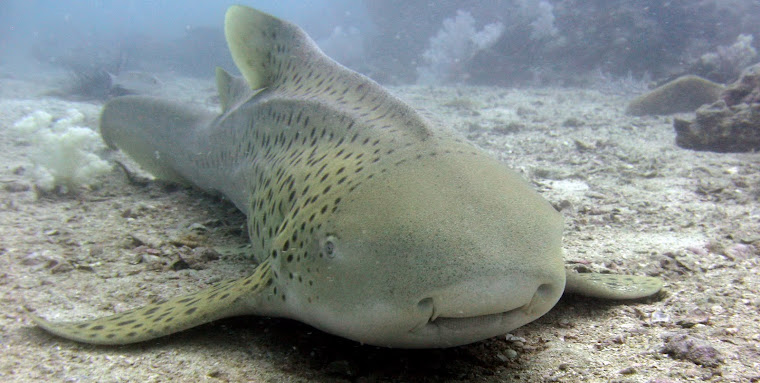
On the eastern side, there is a huge field of staghorn coral - have a look in there for giant moray eels, peacock mantis shrimp, and there are lots of anemone's so plenty of opportunity to find Nemo. A little deeper is a rocky outcrop which we call 'Fantasy Reef', and it lives up to its name! You can often see big schools of barracuda circling overhead, banded sea kraits, big schools of common lionfish, trevally coming in to hunt, and hawksbill turtles. You may also encounter leopard sharks resting in the sandy areas.

There are a couple of beautiful swim-thru's which lead to a shallow coral garden where we normally start or finish the dive depending on the direction of the current. There is an abundance of reef fish here, but also look out for some special things like ribbon eels, cuttlefish and octopus. What we also spend time looking for are black tip reef sharks. Although it is possible to see them all around the site, they like to hang out in the shallow areas, we can often see many of them swimming around here - a perfect way to finish your dive :)

Again, this site is accessible year round and is suitable for all levels of divers, often with visibility of 15-25m. Normally we do this as the first dive on the second day of our overnight trip, but the site is so good that we sometimes do it as the third dive on the first day too. Contact us to book your space for the Overnight special: info@calypsophuket.com


Thursday, November 1, 2012

*Fascinating Fish Fact*


Dolphins are highly intelligent marine mammals and are part of the family of toothed whales called Cetaceans. They are found throughout the world, mostly in shallow seas of the continental shelves, and are carnivores, mostly eating fish and squid. Dolphin coloration varies, but they are generally gray in color with darker backs than the rest of their bodies, although in certain areas in Thailand, it is also possible to see the very rare Pink Dolphins.

Dolphins are well known for their intellect, gregarious nature, and their acrobatics, but there are many lesser known qualities that make a dolphin a dolphin:

*Dolphins have to be conscious to breath. This means that they cannot go into a full deep sleep, because then they would suffocate. Dolphins have "solved" that by letting one half of their brain sleep at a time. Dolphins sleep about 8 hours day in this fashion.

*Unlike any other mammal, dolphin babies are born tail first.

*Dolphins have very little sense of smell.

*Dolphins, like cows, have two stomachs — one for storing food and one for digesting it.

*Some dolphins have been known to dive as deep as 1,000 feet.

*A dolphin's dorsal fin is as distinctive as a person's face.

*Some dolphin species can swim up to 25 miles an hour for long periods, more than three times faster than the best human swimmers.

*In the wild, dolphins can live to be 50 years old, although the average age is 17 years.

*Some dolphins can hold their breath for as long as 30 minutes, while others have to breathe every 20 seconds.

*Bonds form between individual dolphins that may last a lifetime. They've been observed physically supporting sick or dying pod members.

*Dolphins can be quite aggressive and even brutal. Dominant members of a pod have been known to abuse weaker members.

*Thanks to a very sensitive retina that efficiently gathers light, a dolphin can see as well beneath the water as above it.

*A dolphin's brain, in relation to the size of its body, is larger than the brains of chimpanzees and great apes.

*An adult dolphin may consume 30 pounds of fish or more in a single day. Dolphins swallow fish whole, despite the 100 teeth in their mouths. The teeth are used to grasp prey.

*Dolphins can jump as high as 20 feet out of the water.

*The largest member of the dolphin family is the killer whale, which can grow to 30 feet long.

*A dolphin's skin is extremely delicate and easily injured by rough surfaces — much like human skin.

*The largest of the freshwater dolphins is the boto, found in the Amazon River. It can grow up to 10 feet long.